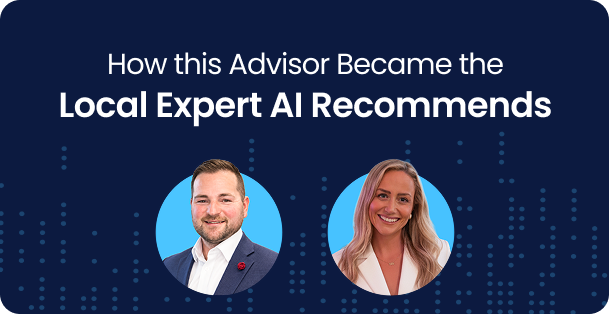


Join industry veterans Bob Veres, Susan Theder, and Samantha Russell for a live workshop where they share out-of-the-box marketing ideas to help you amp up your organic growth, including, but not limited to:
Add these ready-to-use tactics to your repertoire to implement right away or catapult your organic growth in the future!
Here is your summary to skip ahead or scan through below.
That’s right. So let’s do some quick introductions just for those of you who might not know who, Bob is. Bob, I don’t know if there’s anyone in the room that doesn’t know who you are, but why don’t you tell us a little bit about yourself?
Well, I’m a publisher of an ins the inside information service, which goes out to financial planners, and I’ve been doing this for forty two years now. Wow. Just watching the profession and collecting the best ideas and the best thoughts that emerge from this great laboratory of the profession. And and that’s kinda what we’re here for is to talk about some of the marketing ideas that have bubbled up recently.
I can’t believe that. Forty two years. So you it hasn’t changed at all in those forty two years.
No. It’s it’s pretty much the same, and and society is pretty much the same.
And we We have new technology.
I haven’t really explored it yet, and phones look different now. But, you know, I’ve still got my landline, of course.
Oh.
Bob started at eight.
Most people don’t know that.
And One last time.
Samantha. Yes.
So nice to be here with you all.
I’m Samantha Russell, and I am our chief evangelist here at FMG. That title, my dad still roasts me for, but I love it because it really is all about getting out there and talking with advisors, teaching them the best strategies when it comes to marketing, and then bringing back what we see happening boots on the ground to our product and service team to make the FMG product and service the best it can be to help all of you grow organically.
That was so well said. I love that. Thank you. I love the time.
And I’m Susan Theater. I’m the chief marketing and experience officer, and I’m just shy of forty two years. Bob, I think I’m I’m coming up behind you, but probably, like, thirty five years. But it has been Oh, great.
Yes, way. And I love I love this industry, and we are gonna have fun today with Bob and Sam talking about, I think, one of one of the topics that I find advisers to like the most, which is just some of the out of the box ideas that don’t require, you know, you to be a digital marketing expert or on social media every day, but just some of those ideas that actually can yield some of the best results and don’t require a PhD in marketing. So we’re gonna be sharing those today.
And I’ll stop sharing, I think.
Yeah. I was gonna say we can come back to those other two, takeaways in just a minute. That’s the beautiful thing about today. We don’t have a whole bunch of slides.
It’s really a conversation, and so we just wanna reiterate in the chat as we’re talking about things. We wanna hear from all of you what have you seen work, what’s been a big flop. I think we can learn really well from mistakes. Yeah.
But maybe we should start, Susan, by having Bob help us set the stage with some of the challenges that people are facing today.
Yeah. Well, you know, the challenges are obvious. The profession has stalled in terms of growth and in terms of new clients. And, well, the the way I approach this is I I’m an advocate for the fiduciary financial planners, the people who add value.
But, unfortunately, most of you are needles in a big very big haystack. It’s hard to find you. And that’s your fault because there are consumers who want and need you, and the market is filled with people who have a predatory agenda, who are not technically adept, and who are are not sitting on the same side of the table as their clients even though they’re posing that way. So what I really want is for you to you know, if somebody throws a dart at the profession, they’re gonna hit, hey.
They’re not gonna hit the the needles. And I want you to stand out more. I want it to I want it to be easier to find you. So we did a prep call and, you know, I offered some of the most advanced marketing ideas I had, which was cold calling and playing golf with people in your community and saying, I get paid two ways.
And and, surprisingly, they weren’t as enthusiastic about those as some of the more modern ideas that were bubbling up. So I’m gonna talk about other ideas other than those tried and true ways to and the first, is it alright if I just start in on some of the ideas?
Yeah. And, like, you know, dribble in what you’re talking about. You know, I think advisors are struggling with organic growth, but they also, I think, struggle with marketing. You know?
So it’s like people are like, you need to market. They’re like, you know, I try it. It doesn’t work. Or I I try it for a little bit.
I get distracted. You know? Maybe weave in just some some of your thoughts of what you’ve heard about the importance of marketing and the challenges around this.
Of marketing is just to just to make it easy for people to find you. I think it’s a very simple one sentence use case. You need to make it easy for people to find you. And so there’s there’s all the usual stuff, like, you know, social proof, having a good website, and having blogs and video and and all that, and and that’s Sam and Susan’s, purview.
What I’m gonna tell you is is some of the things that make you stand out a little bit, Some of the things that are different and and maybe new and interesting. So the first is what I call fiduciary marketing. And fiduciary marketing, it’s a very simple concept, but it repositions the thinking of advisors. You know, a lot of advisers who are really good at what they do think, yeah.
Well, if I do marketing, that’s for me, not for the the marketplace. And so it’s it’s a selfish agenda, and therefore, I won’t do it. Everything I do is for my clients.
And what I would suggest is that if you reposition it to what I call fiduciary marketing, that means you don’t have an agenda anymore. Your only goal is to benefit the community, to educate the community, to help the community to understand all the various issues that they need to understand in order to navigate this god awful complicated financial landscape that we’ve created for some reason.
You just coined an amazing phrase, Sam. I mean, we talk all the time about being altruistic and sharing information. That’s our whole strategy is is a content strategy sharing valuable information. But fiduciary marketing, as as the way to describe that, is brilliant.
Well, so mind shifts. Mind shift.
Mindset shift. Yeah.
So So an example of that is, you know, seminar marketing is not a new idea.
Right? I mean, it’s been it’s been done since I started this business.
But there was an adviser who does webcast, basically, a seminar, and says, I’m going to show you everything I do to manage assets, all the tricks in of the trade. And I and I’m gonna hold nothing back. You’re gonna say everything I do and how I do it, and then you’ll be able to do it yourself as I do it and and with all the tools that I use. And they go through the databases and the the, various software that they use and how they create portfolios and the rationale behind the portfolios, and they give it all away.
And at the end, the the the closing lines are that this is a lot like painting a house. You can do it, and now you know how. And and you’ll probably be pretty good at it. But it’s not easy to do. It’s time consuming. And if your time is better spent doing something else, I’ve got all the tools. I can probably do it more efficiently, maybe better.
And so if you’re interested in having me do all these things for you, then get in touch. You know, I’d be here and here’s my number or here’s my contact information.
And consistently, just simply giving it away, everybody in the audience does it better as a result. They understand certain concepts, and so they made the community better as a result. But consistently, about thirty percent, maybe even as many as half of the attendees will say, you know, I’m really not interested in doing all these these things that you’ve explained to me.
And, also, it just knows how much more complicated it is. It’s not, you know, buy the S and P five hundred and, you know, go to sleep.
Right. That’s right. And so and and by the way, I do other things in addition to investment management, and that’s part of the service I provide that you would be getting if you work with me. And so it’s a really good way to frame the the whole marketing concept as, you know, I’m giving it away. You’re gonna be better for it. But, you know, if you want me to do it for you, then here I am. So that’s that’s what I call fiduciary marketing.
I think that could work with a financial planning approach too. You know, like, the invest you know, showing behind the scenes in our investment management process, but also, like, behind the scenes with our financial planning process. Like, any of those, let’s just show you what we do, and then people are so blown away and overwhelmed by what you do that they’re like, please just do it for me. Anyway, great.
I say one of the things that I’ve seen work really, really well is somebody did this, and they took that exact mindset. Let me show you how we help somebody with a financial plan. But because the idea of, like, financial plan, even those words sometimes can feel overwhelming to a a consumer who’s never gone through a financial planning exercise before. So they just said, let us show you how we help people like you.
So whatever the niche is. And then they said, you know, we had John and Kathy, fifty and fifty eight years old. They live in this town. Here’s what they came to us with the problem.
And the problem was, like, they’re gonna sell a business. They’re thinking about retirement. They’re paying for their kid’s school, but also helping take care of their parents. And they kinda listed out what the issues were, and then it was like, as part of the process of working with them, here’s the questions we asked.
Here’s the goals that we determined that they really wanted to focus on, and then here’s what we did. And it’s like a case study on the website, but then they also turn it into, like, quick little social posts. And you can obviously repurpose the content in a lot of different ways.
But to your point, Bob, I think telling it in a way that’s, you know, flipping up the hood, lifting up the hood and saying this is what really happens behind the scenes, but doing it in very simple terms.
I think one of those mistakes I see people make a lot, and I don’t know if you agree, is they wanna sound smart or they’re just used to using certain terminology, and then it goes over the audience’s head because they’re not in our industry. They don’t know what some of these words or phrases mean. So keeping the language simple too, I think, is important.
Of course. And, we better hurry a little bit because I wanna get to the pizza story, which is at the end of the week. Alright. Let’s stop interrupting. Pizza story. I think everybody’s gonna be disappointed.
And the fiduciary mindset, by the way, the marketing fiduciary marketing mindset also works with PR.
I get approached by people who say, you should write about me because I’m so goddamn wonderful.
And and and everybody wants to hear how wonderful I am, and that actually is not what journalists wanna hear. The better way to approach them is, I wanna be your ally. I wanna help you help consumers understand whatever it is you’re trying to convey. And if I don’t know the answer to questions, I’ll respond, and I’ll give you insights to the best of my knowledge. If I can’t do that, then I’ll find somebody who can. And think of me as a resource. And that is always a better way to form a relationship with, writers.
Absolutely. So can I go to the next one? Absolutely.
Okay. I I keep getting permission. Here, this this is good that I’m getting permission.
There I ran into an adviser. He actually works in the Central Valley in California, which is a not a not an easy market to because it’s not a a market of great wealth. But what he does is he helps his clients practice retirement.
And, you know, instead of doing client appreciation events, what he says is, you know, I’ve never retired. I’m I’m still working. And most of my clients have never retired. They don’t really know what that what’s gonna be like on the other end of that threshold.
So let’s just try things. Let’s, you know and he’ll get his clients to suggest ideas. You know, it might be a wine tasting. There are group golf lessons, group experience, painting and drawing.
But the ideas really come from his clients. And what I thought was interesting was that the the I many of the ideas come from his retired clients. What do you enjoy doing? And then what would you enjoy doing if we could organize something?
And he’ll invite them, and he’ll invite the pre retiree clients to participate. And and this is what you might wanna do, some of the things you might wanna do in retirement when that scary event happens.
And, by the way, you can bring your friends who are also curious about what, you know, it’s gonna look like on either end of retirement.
And so he creates ten or twelve fun events a year, and he says, you know, I for the marketing expense, I get to have fun. And we were talking pre before this, you know, this idea of having fun. I’m not sure what’s in it for me, but, you know, fun some people like fun. You know?
They enjoy it. And he obviously does. But it reframes the whole idea of these events as something serious and fun at the same time. Something where you’re going to learn what retirement is like and how to how to enjoy it, how to how to how to how to become a successful retiree, not in your finances, but in your activities.
And we’ve turned into a tremendous marketing opportunity because the people who are invited say, well, you know, I I kind of like having fun. And I kind of like the idea that somebody cares, that I would enjoy retirement.
I love that idea. I mean, I’m I’m in my late fifties, so I’m probably, like, a perfect target audience for that concept. And, you know, if if I was invited to just, you know, an average client appreciation event, I think I’d be like, maybe. But if it said practicing retirement, you know, pickleball or tennis or golf or, you know, any whatever it might be, woodworking.
Just changing that name, which is why I love marketing because just the words really matter and calling it a re practicing retirement event, I would go and I would invite friends. So I I think that’s brilliant.
Alright. Can I do another one? I’ll I’ll keep asking for permission here.
Just keep going. Okay.
Well, the third one the third one is absurdly simple, and yet it’s really, really it it’s turned out to be really powerful.
An adviser you know, the the whole idea of getting referrals has become more complicated as I think you know. You know, it used to be somebody would play golf with somebody and they would say, hey. You wanna talk to my financial planner. And they would call the financial planner.
Now they check the financial planner out on the web, and they notice that there are a hundred million other financial planners. And so there’s this this new space between getting a referral and actually making the call. And that’s where all the social proof thing comes in. I think it’s an interesting concept.
But what this person does, what this advisory firm does, is they have on their website, right up at the beginning, something about how, you know, I’d really like to know what people are thinking about their goals. What do people want from us? And, you know, you as a visitor, can you tell me one or two things that worry you about finances or investments, Number one. And number two, can you tell me one or two things that’s on your bucket list?
You know, no obligation. You know, this is not making a making a a an appointment. Just let us know what you want, what you’re thinking about as a bucket list, and what you’re worried about. And the interesting thing about that is it creates a small but significant bit of engagement with a prospect.
It opens the door to what clients really want, which is not really asset management. It’s not tax planning. It’s not how do I do a a Roth IRA conversion. You know?
It’s it’s how do I get to those bucket list items? How do I make them feasible in in my life? And here’s somebody who’s interested in them. And that seems to have loosened the or lubricated the process of getting that that initial, phone call.
So you you guys you guys surprisingly don’t have any comments on that, so I’ll ask for permission to do the the next one.
Sorry. I think we’re both on mute because we were typing in the the chat to people.
I am on mute. Yeah. Me too. But Yeah. No. We love it, and we don’t wanna slow you down because people are asking us for the pizza story.
Okay. Well, yeah, don’t slow me down. We we won’t do that. So I recently learned I I did an interview with, a video company, and, they actually made me look less dorky on video, which I would I would say is it was a an achievement comparable to the creating the building the great pyramid.
You know? So I I thought it would be impossible. And then sure enough, I I looked less dorky, which was, you know, amazing. But in the course of that, I heard the story of some an adviser who shared an intensely personal story in video.
And he did it, you know, he he did it with a with a an iPhone, you know, and he held it up. And it was incredibly, unprofessional looking. It was, you know, bit crude and and raw and authentic.
And, basically, what he said was all his life, he’d been really good with numbers. And, you know, everybody else had trouble in algebra class and particularly in calculus. And he said, you know, he just he just sailed through all that stuff. And he didn’t really realize that that was a unique skill until he started encountering other people in in the math math classes.
And then at some point, he realized that this was something he could use to help people, that mathematics are annoyingly involved in us having to navigate our our lives, particularly in the field of finance, but pretty much everywhere.
And so in the video, he says he really enjoys doing things that most people hate.
And he sent it out to clients, and he invited it to invited them to send it to their friends. And he said, you know, I got into this profession because I’m really good at doing the things that most people hate, and I enjoy doing these things that you hate. And so I’d like to help you do these things that you hate and and do them for you.
And he got a flood of messages back. You know? Thank god there’s somebody like you out there because, yes, I do hate the math involved in financial planning, in investments, in filling out tax forms, and all this stuff.
Yep.
And it it actually made people realize it’s a reframing because it made people realize, yeah, there’s an annoying amount of math in in all these things and filling out forms and, you know, whatever.
Oh, I have to pro one question that just came up from the audience that I think is a great one, and, Sam, definitely jump in on this. Somebody is hosting Michelle is hosting a client event tonight, and she has Amy Florian coming. I’ve definitely I’ve met and heard Amy speak.
And she’s asking, what is the one thing that she we should tell her to be sure to do at the event.
Any idea?
Sure to do at the event?
Yeah. To make the most out of it.
Michelle, is this just clients or prospects too? If you could let us know too, I’d be curious if you told clients to bring a friend, or is it just just for clients?
And virtual or in person? I’m guessing it’s in person. She’s typing. Okay. In person. Person.
Ten guests, but clients and prospects. Okay.
You know, I the the most important thing, I think, is being interested in them.
You know, you’re here you’re here to hear Amy. Amy is terrific. I’ve heard her too when I’ve written about her a few times.
What what what it who are you, and what what is what attracted you to this seminar, and what are the things that you’re interested in? The key to making relationships is never about talking about yourself. And I think most women understand that. You know, you you’re on a date and the guy talks about himself the entire date and shows no interest whatsoever in any asking any questions about them. And it’s it it it’s not just off putting. It’s offensive.
And I I don’t think, you know, who the person is putting in this webinar will be offensive. But I do think that the key to helping create a relationship with those people is to just ask them. What what what what more is there about you? And if it’s clients, then you deepen relationships.
If it’s prospects, then you’re making relationships. Does that make sense? Any of that?
Yeah. Absolutely. I’ve got some ideas too. Sam, you wanna go next?
It’s funny. I, think one of the things that I I agree with everything that you’re saying, Bob, and I remember reading a thing about, like, the percentage of time you spend talking, about yourself correlates directly to how favorable you rate an interaction.
Like, the more you talk about yourself or you’re speaking versus listening to someone else speak.
So I think that’s a great tip.
But I would just say, you know, my mind’s always thinking again about how do we then, after after this is over appreciate it. Continue it. And so making sure you have a way to collect the information collect emails in a noninvasive, nonsales y way from the people who come, and then be able to, you know, continue to like, we talked about that. Bob coined it, fiduciary marketing in the beginning. Continue to be able to share with them relevant, timely, helpful emails afterwards so that you stay top of mind.
Yeah. And I I was thinking, you know, obviously, take pictures at the event so that you can leverage those on social.
Possibly, I don’t know if Amy’s agreed to it, but if you can video part of it, you know, with the audience and having her speaking. You can create some short video clips that she may or may not, allow you to use. You wanna just ask permission.
It’s a great opportunity if you have clients there. Obviously, they’re probably fans.
If you are using testimonials, most of you, I think, are dabbling in that. You could take advantage of the fact that they’re there and just do a quick, like Sam, what do you call them? The, like, on the spot interview point and shoot? And just ask them a question, like, you know, tell us, you know, what you’ve gotten out of working with us, and then you can get some, you know, quick testimonials that you can use on your website or in your email.
And then I think, of course, the follow-up is the most important and making sure that the follow-up is, fiduciary marketing. So it’s all about them, and you’re giving away and you’re not going, like, right in for the close. Remember, you know, some people aren’t going to call you the next day and wanna engage, but it could be six months down the line. So just putting them in your prospect list and continuing to drip on them.
Make sure not to lose them. It’s not a one and done, like, thank you for coming, and now you’re off. Gotta be dripping valuable content on your prospects.
Okay.
Oh, yes. You do have to I would ask your clients first. And maybe even there’s a way to just as they sign in, I have a checklist to say, you know, let us know if you, do not want us to, you know, include your, you know, image and pictures or anything like that. There’s we can probably you can email us afterwards, and we can give you some language.
You know? And some of these meetings, I’ve actually conducted some of these meetings. And getting them talking to each other is always a really interesting thing. You know?
Somebody what what’s on your bucket list? What are the what do you guys have in your bucket list? Well, that’s interesting. And and and you how different from one to the other.
I I always I I I think that when people who attend these things kind of get to know each other, they inadvertently form a little bit of a community around you.
And that’s, a dynamic that I think you wanna encourage as well.
But I I also would let Amy do her thing because interrupting Amy is never a good idea, because she helped she has a lot a lot to share about the Definitely.
Alright. We we we lost the flow a little bit, but we’d love to we’d love to make sure that we’re engaging with the audience. So I hope that was okay. So we’re on are we on our fourth? Your fourth? Are you are we up to date?
This is actually the fifth.
I have a sixth, which is the pizza story, and then I have a bonus Oh my gosh.
Okay. Which is the perfect thing to say if you’re meeting with a prospect who’s also considering the brokerage firm down the street. So I hope I get a chance to come up with to tell people the perfect thing to say under those circumstances.
I am by the way, I am a big fan having been, you know, CMO at Advisor Group and Cetera. I am a huge fan of independent broker dealers, so let’s make sure we embrace the independent market as well.
Yeah. Yeah. Well, I’m talking about the brokerage firm itself. The the the wire houses is what Just clarifying. But you guys can interrupt me. Tell me tell me what to say.
That’s why I asked permission.
So alright. In my last last newsletter, well, this is the fifth one, I told the story of an adviser who was he he said he looked like he was fifteen years old when he started in the profession, which is not really a a way to command a presence among, you know, pre retirees who have large portfolios.
And so he he, independently of his marketing efforts, decided he wanted to give back to his community.
And so he would print up a little certificate and give awards to the student of the month and the teacher of the month at the high school he graduated at. He was in the same community, and so he would give a twenty five dollar gift certificate back then and a student of the month certificate and a teacher of the month certificate at the school, and the principal would be there to participate in a ceremony, if you will. And the local paper would take pictures of the student of the month and the teacher of the month and the ceremony.
And all of a sudden, you know, this this guy, who looked like he was fifteen years old, would be getting calls from people saying, I’d like you to be my financial planner.
And he finally worked worked up the courage. He said, you know, there’s a lot more experienced financial planners around here, and why are you selecting me?
And they said, because you believe in in supporting the same things we believe in supporting.
And he realized that this was a marketing vector that was purely what what it purely something he wanted to do for the community turned into a marketing vector, and he realized that other people wanted to benefit their community and liked to support people who were like minded, if that makes sense.
And so he still does this with different school districts in the area, but he’s branched out. He he actually does a coaching program now. But, he I he will help advisers identify local community causes. One might be feed the hungry.
Another might be homelessness.
Another might be scholarships. But identify what you’re passionate about, and let your clients know that some of the money that they’re paying you is going to go toward addressing these community issues. And it needs to be a local community issue. It needs to be something that they have a stake in, if that makes sense. Yeah. And what he found was that not only is this a marketing vector, if you will, but the more interesting thing is that it it turned into a staff motivator.
And I I hadn’t really thought about this, but I’ve heard rumblings in the past about advisory firm staff people saying, yeah, we’re just here to make the wealthy wealthier. Mhmm. We’re making the rich richer, and that’s, you know, what we do. And I’m not really very enthusiastic about that and, you know but addressing community issues and having a a philanthropic cause that the firm will address turned out to be a staff motivator. And oddly enough, it turned out to be a motivator for some of the senior, older advisors who are a little burned out, who, you know, do I really wanna keep doing motive? You know, I I could already retire if I wanted to, and now I’m just going to the office and doing these things. And it it reengaged them in something bigger than themselves.
They were doing something that they felt like was was benefiting the community, and now they’re they’re they’re wanting to to to make basically more money because they can get more money away, if that makes sense.
Yep.
And, there’s another piece to it, but I if you guys wanna comment on that, I I thought that was really interesting and and actually really works work work really well for the people who are doing it.
That made me think it’s not exactly the the same, but the whole idea of, you know, doing something altruistically, but then there’s a benefit, you know, that comes out of it, I guess.
There’s a adviser that I know, and he noticed that a lot of the retirees in this local area were picking up pickleball. Susan, I know we’ve talked about this before, and that they didn’t have, like, a great network of people yet. It was just starting to come around in Tennessee where he lived, that, you know, of getting together and playing. So he helped organize a group, get everybody, you know, on the same, like, email chain and text chain to do pickup games and worked with a local, like, YMCA to, I think it was a YMCA, but basically to get everybody, on board.
And then in their local Facebook group was able to post about it saying, hey. You know, if anybody here likes pickleball, and there’s a lot of retirees in this Facebook group, we are hosting these events. And then he found a pro to come into town, and he sponsored or his firm sponsored the pro to come in and play and do, like, a tournament. And it turned into, like, this whole thing, but it was really less about, hey.
I wanna work with you as an adviser and more just, you know, there’s all these people with this like minded interest. There’s a need for it. We’re gonna help facilitate it. And but it’s led to real clients coming out of it, which is so fun and different.
I love that.
That perfectly tees up my next one.
If, Susan, if you wanna comment on that, I can No.
No. You go.
Alright. You teed it up, Sam. Thank you for that.
You’re welcome.
The the next one is is and and this is something I’ve written about three times now. It’s it’s about creating communities of clients.
And, you know, we we talked about niches or niches. I’m not sure how you pronounce it. I I pronounce it niches.
Let me turn my phone off. How dare that phone inter intrude.
So but the the idea is you have a you have a group of clients that you’re serving that are that have something in common. And there some of the examples are one one adviser works with Wall Street women. She worked on Wall Street, and the women there are kind of a a sisterhood because they kind of have to be because it’s such a male oriented universe that they work in. And so she began working with female executives in on Wall Street. She’s she lives in New Jersey.
And she started creating a Wall Street women group or community where she would ask her clients, you know, who do you wanna hear in a in a in an event? And it turns out they had ideas about people who are, you know, high achiever Mhmm. People in in their world, in their community, or in some cases, the what do you call them? Headhunters who, you know, help people move from one firm to another and how to negotiate their contracts.
And and all the all these different ideas were bubbling up. And so she would have every quarter, she would bring the group together with a speaker that they had asked for. And she would say, you know, bring invite anybody who’s in our community to come. Yeah.
And, you know, maybe ten or twelve of them are clients and maybe forty or fifty of them are not clients.
And they all get together and they hear this presentation and they get to know each other in a way that they didn’t before, and the sisterhood becomes more bonded. And it’s all around her, this adviser.
And, others have done this as well, and there are two go ahead. I’m sorry.
Where do they do you in that example where you mentioned, like, forty, fifty people, do they do it at the office, or do they rent something out?
They rent out a a a space that’s that’s in Manhattan, actually, that’s, convenient to everybody.
So they get on the subway and and head in for Curious. Do they use sponsors to help pay, or they just pay out of pocket and leave it at the front?
Got it.
And the speaker usually, the speaker will speak for free in front of a a Yeah.
The right audience.
So but there are two benefits to this. One is the obvious marketing benefit, and that’s what we’re talking about as marketing. Because you’re now talking to forty or fifty people people who are in that community, who know the ten people who are in that community, who are your clients, who will check out. You know?
What do you think of her? And and the answer is she’s great. She’s a wonderful financial planner. And the other is the and and so it’s it’s it’s a perfect marketing opportunity.
But it the other is you get to know the community at a deeper level. You get to ask people who are not your clients, you know, what are you interested in? What services can I provide for you? What are your issues?
What are your and the more you know about a particular group of clients, the more able you are to address their needs and, of course, the better you’re able to talk up to them and about them in your outreach efforts.
And so and in your, you know, your messaging, your blogs, whatever, you know, it’s so you get this double benefit from having communities. And there’s a firm in in Atlanta that does the same thing. They have a group of business owners. They have a group of attorneys.
They have a group of medical professionals who all, become become a community in their area. And I think this could be done differently. I think it can create a a national community through this the Zoom technology.
To make it super actionable, do you have any, background on how some of those got started, you know, for somebody that wants to start to build that community? Yeah. Maybe give some hints or suggestions.
Yeah. Yeah. When I write the articles, I usually find out things like that, the basics of it of how to do it. The the basics of how to do it is you you want to create a community. And so you look at your client base, and you discover that there are four dentists.
And so you say to the four dentists, would you be willing to be on a advisory board that would help me reach out to and create a community of dentists in our area or nationally, however you wanna do it. And so now you have an advisory board. Well, who would they wanna listen? Who would they wanna hear from?
Well, there may be people who are specialists in the the real estate, the particular real estate the dentist would inhabit, and and maybe the marketing efforts that dental practices would do. And maybe it’s negotiating a new, arrangement with a dental community. Whatever. I don’t actually know what that would be.
But Right.
Right. Once you get once you get it, you come up with the topics. Yeah.
Well, once you have that have that advisory board, then they tell you that you don’t have to know.
They tell you what oh, so and so is a great speaker, and you’ve never heard of that so and so. But if you give a shout and say, could you talk to fifty or sixty people in this dental community?
It’s it’s it’s webinar marketing on steroids because everybody has something in common when you’re doing these webinars or when you’re doing these community events. Great.
And I think, you know, I can I can imagine advisers asking, but how do I you know, what’s what’s the fiduciary angle on this? Doesn’t it seem, you know, transparent? But I think if you say that you’ve got a community of a particular niche that you work with and you’ve heard consistent themes and and challenges and or topics of interest and you thought you’re in a position to facilitate a, you know, a networking group and host the speakers. Like, that’s kinda how I think I I would segue it into, you know, what’s in it for you. So, Sam, I know you had a couple ideas too that you wanted to share.
Or Well and I saw we just got a question. I’m sure a lot of people would love us to all touch on this, which was Ian asked, do we have any specific advice about getting more referrals from our existing client base? And, you know, it’s a question we get asked all the time. And I think, Bob, you hit on it before where people, yes, are still getting referrals, but the way they vet those referrals and the process of deciding which one to go with is, really, really important. But I think one of the things we’ve talked a lot about so far is events.
And I think one of the reasons events work so well, is because they take something and they make it a conversation starter. Right? Like, people don’t typically leave a meeting where they are talking about their finances with their adviser and, oh, I gotta call five of my friends and tell them about this. But if they leave an event that was fun and maybe made them think a little, maybe they learn something new that’s really, like, you know, eye opening, whether it’s about scams going on that are targeting people and identity theft or they got, they, you know, figured out there’s a pickleball court now that I can play at that I didn’t know of that I could play at before. Whatever it is, that’s something they wanna talk about. And so one of the things I’m always trying to think about is how do we create referable moments? You have an interaction with someone where it creates such a either moment or or a moment of fun that they want to talk about it with someone else.
Yes. And most of that is not financial, which is why we wanted to host this webinar because there we all just hear of so many great ideas.
And most of the time, it’s, you know, it’s creating a an opportunity for a referable moment where somebody’s gonna talk about you because it was not a financial oriented topic. So I’ve got, like, I’ve got a a list of some quickies I could run through. Are there Yeah.
Let’s do that.
Did you see other questions that I did.
I saw some Can I can I have you on that in on that?
Yeah.
Because I I I’m I’m gonna make everybody angry here. I I don’t think the referral process works anymore.
I don’t think when a client says to a a friend, you should check out my financial adviser, that there’s a high probability that that person will make a phone call or or schedule an appointment. Because the the checkout the checking out process is kinda like the dating process. There’s an incentive just to wait left.
And so what I think needs to happen now now is you you need to have an event or something where your clients invite their friends and they get to meet you if if they attend the event. They’re they’re not gonna do it on their own, but if they do, they’re not gonna call you on their own, but they might attend one of your events.
So I think there’s a there’s a checkout process. I think instead of asking for referrals, instead of getting referrals directly, I think you need to get your clients to invite their friends to something that you’re doing, a webinar or a a meeting or something.
I think the referral process has gotten broken.
And we’ve talked about language you can use before too. You know, our having an event, rather than just saying, we encourage you to invite friends. You know, first, make it something people really do want to go and listen to.
For sure.
And then secondly, or attend. Secondly, say, you know, few people have reached out to us asking if they could invite a friend or a family member, and we have a limited number of spots. We’re gonna allow each each one of you to invite two people, and make it sound even more exclusive because that exclusivity, you know, like, people are like, okay. I have two spots to fill is very different than, oh, I can just tell anybody I want. Right? They’re gonna think more intentionally about who those two invites should go to. Totally.
And I think I think we’re saying the same thing in that referrals aren’t dead.
It’s just the the way someone converts as a referral is very different. They are going to Google you. They are going to check out your website. They are gonna check out your social profiles.
They’d love you know, if they’ve met you and you’re dripping on them with valuable content, you know, it’s it doesn’t it’s not a snap. Like, Joe referred me, and I called, and I’m done. It’s it’s a process, and it involves marketing and communications and really a digital brand. But events are a fantastic way to get that email, make that personal connection, and then drip on them.
But with our remaining couple minutes, Sam, should we do just sort of a fire I don’t know, fire off some ideas and And we’re not gonna get to the the pizza story?
Oh my gosh. The pizza story. We haven’t got Bob, get the pizza story out. Come on.
Okay. Well, there’s that, and there’s also the perfect response when there’s a anyway, we’ll get to that.
Okay. Oh my gosh. We’re running out of time. Okay.
Pizza story So at our conference, we heard from an adviser who loves pizza.
And and that’s such an unusual thing in this world. Right? You know?
But My stomach just fell.
He had a client who loves pizza, which is not totally unusual either.
And so he and the client he arranged for the client where he and the client would go to every pizza joint in town, and there are about two dozen of them as as Wade described it, to definitively find out who was offering the best pizza.
Well, he he told his clients, you know, we’re gonna do this, and and we’re gonna find out. We’re gonna and a couple of the client’s friends love pizza, and a couple of clients love pizza. And they asked if they could go along.
And pretty soon, the long story short, there there was a group of eleven people who were going around to each of the pizza places, and there were a bunch of other folks who wanted to follow this interesting process, pizza joint by pizza joint. And it became this this, big, discussion thing that the advisory team was in the middle of.
A pizza crawl.
Anyway, the the long the short version of the story, because we were at almost out of time, was there this was a roughly one thousand dollar investment pizza search, if you will.
Totally. That’s a great idea. And I I think I might have interrupted you when you were talking about the broker down the street. I just wanted to make sure that we’d like we we do like broker dealers. But what was the what is your response when somebody’s competing with the broker you know, the wire house down the street?
Yeah. And I I have to say, I feel the same way about the broker dealers. Most of them are mostly big only, and they are or most of most of the reps are in advisory firms. They are IRA IARs.
Or or that’s who I’m talking to. But, you know, you’ve got the Merrill Lynch or the Morgan Stanley office down the street or whatever. And so, you know, the client the prospect comes in and says, you know, I’m I’m looking at you and several others, and you ask who and they say, let’s say the the, Edward Jones office down the street. And you say, well, you know, a lot of people have a good relationship with a sales agent.
And they say, what? Sales agent? What do you mean? And you say, well, you know, there’s there’s there are different ways that people are compensated and different ways that people organize their their service model. And, let’s let’s just go to the bro there’s a a a website called BrokerCheck that you we can check, and I’m not, you know, I’m not too familiar with Edward Jones. We can go on broker check and check and see if they’ve had any regulatory infractions or any lawsuits that led to them disgorging, and and let’s go check. And, of course, any brokerage firm the the brokerage firms have this huge advantage in that they have a brand.
And the the the brand can can buy Super Bowl ads. But the the downside is that the firm on BrokerCheck amalgamates all the regulatory dings right there on broker check. So there’s an advantage, and this plays to their disadvantage.
So you go on on the broker check, you say, oh my gosh. Look look at those. One thousand six hundred and forty seven different regulatory infractions for Edward Jones, and that’s only since twenty twenty. Well, you know, in fairness, let’s check our firm’s broker check. And, of course, you you check and you have no regulatory infractions. And so you say, you know, I I I I’m not gonna discourage you from working with them. I just want you to go in armed with understanding the the the possible downside of working with a sales agent.
And I’ve had I’ve known people who’ve done this.
And they they generally speaking, the client the prospect will never visit that office.
They’ll and they may not get the business, but they won’t lose it to the brokerage firm down the street.
Awesome. Alright. Well, we are getting to our final minutes. So, Sam, I know we have a poll, and we wanted to talk a little bit about how FMG plays a role in helping advisers both with driving referrals.
And I know we got a question on SEO, but also these events. And so I don’t know. You wanna take it? And I I have a lot of questions.
I don’t I I think you have the screen sharing too, but, we’ve got some questions about F and G and what we do and how we can help you, you know, really with this organic marketing. So first, we’re gonna launch a poll, Aubrey, if you wouldn’t mind, because we wanna make sure we reach out to the people who most want to learn about how they could work with Susan and I and our whole team at FMG, to help with their marketing. So you can just say yes or no. But in a nutshell, we’ve we’ve talked a lot today about how there’s a lot of things you can do and that just as Bob said in the very beginning of the hour, you also know, though, that your time is best spent oftentimes doing other things, and so it would be nice if you could hire someone to do it for you.
And so we actually have a program called do it for me where we, every single month, put our heads together, Susan and I, and think about what are the topics, what are the timely pieces of, you know, legislation, what’s going on in the economy that we if we were running the Sam and Susan advisory firm, we would wanna talk to our clients about.
Yep.
And then there are all I don’t know, Susan, if you wanna, pull it up while people are answering the poll, but we can actually show you what we help you then execute, because it is a lot, and you actually are paired with a concierge who will help do it for you.
And there is a lot there. So let’s pull that up.
I don’t have a I’m just trying to click on it now.
Let me just let the hosts and and Dan last vote.
So I Oh, okay.
Just quickly, though, as it relates to what we’re talking about here, one of the other things we do in the do it for me program is every month, Sam and I put our heads together and come up with our best idea, our best marketing idea, which really fits into what we’ve been talking about today. Some of these out of the box ideas like a like a pizza crawl or the fiduciary marketing that are gonna give you an opportunity to, you know, get in front of prospects and get referrals, and then we’ve got the content and the person that you know, the concierge will help you drip on them until they’re ready to convert.
So some of our ideas and everybody who attends is gonna get a list of our last twelve. I think it’s our twelve months of our last do it for me marketing tips. So you’re getting twelve months of our tips, which is great. But since it’s almost we’re getting into the fall and Thanksgiving and and the holidays.
There’s so many great opportunities. I just wanna rattle some off, and some of these will be future do it for me topics. But, one, like so Thanksgiving is coming up. Most people have all their families coming in to be part, and I know lots of you are trying to get in with the next generation.
One idea that I heard from adviser is the, Saturday after Thanksgiving, they do a toy and clothes drive with, with Santa, and they have an ornament making station and a gingerbread house because grandparents are typically like, what do we do with the whole family while they’re here for the weekend? And it’s just perfect timing, and it’s not expensive. And so it’s a great opportunity to meet the next generation and, you know, do Sam’s trick where you say it’s super exclusive. Well, we have a couple extra spots.
If you wanted to bring one friend, you could. Another one I’ll just throw out really fast is, helping, you know, hiring a photographer, finding, like, a beautiful park some sometime in the fall doing, you know, refreshments and stuff like that and inviting families to brick to come and get their like, a family photo for their holiday card taken. And, ideally, work with, like, a photographer who has a couple different templates for the Christmas for the holiday card. And they can pick their template, take their photo, and then, you know, that they’ll pay for the actual printing of the cards, but you’re taking care of the photographer.
And, again, a great opportunity to bring the families together.
And, again, you can go ahead and get a that tip.
A friend, and then their holiday cards are done for them. And then everybody they send their holiday card out to, hundreds of people, they say, what a great picture, and they say, yeah. My financial adviser account, a referable moment. It’s a chance for them to talk about you in a way that is not like, yeah. I had a great financial review. So we don’t have time for us to go into more, but Sam and I have a lot of great ideas, and we bring that to our do it for me program.
And we also help you execute an event on a quarterly basis using our platform, which makes it easy for you to have a landing page where you can do RSVPs, you know, customize the look of the e invite, the print invite, if it’s a, you know, a public event, social post, and this the whole bit. So, we are very proud of the program, and we love how it connects into all that Bob has talked about, which are these, you know, ideas that maybe aren’t part of the, you know, PhD marketing program, but are what we hear from real advisers who have had success. So back to you, Sam.
No. I that was lovely. And I think the the main thing is not only working with a partner like FMG, do we help you come up with the idea, but we help with the execution of, okay. We we got some momentum. We got people interested.
How do we stay top of mind with them and do that fiduciary style marketing where we’re just gonna give them great insights?
So we would love to share more about that with you. And I think we have a QR code too, Susan, we can put up on the screen for people who want to, learn more. But I was just gonna go through and see if there were other any other questions that people had in the meantime, that we wanted to make sure that we answered. Bob, was there anything that came to mind for you while I’m looking through the questions?
I just think that advisory firms need the the the fiduciary and the the the people who provide real value. You you you need to put more time and energy into marketing because you need to make it easy for people to find you, But like I said in the beginning and I don’t think most advisers are spending nearly enough time, energy, money on helping the community find you. And if if the community finds you, they’re gonna benefit from it.
Well said. Okay.
I think you might so much time and it doesn’t give you guys enough time to Oh my gosh.
No. This is all about this is all about you. You are you are an icon, and we love hearing your stories. I didn’t realize I mean, I I know you, and I didn’t know how funny you were.
We could just do a comedy act, but we are almost at the top of the hour, and I I love giving everybody just a couple minutes back. Thank you all for joining us, and I hope you have a wonderful weekend, and we will see you again soon. Bob, thank you so much for your time. It was really wonderful.
Alright. Thank you. Take care, everybody.
Bye.